
There is no more time. The Mediterranean is a sick sea and it needs treatment now. It continues to warm, acidify, lose biodiversity and oxygen, become poisoned and suffocate under plastic. Empty words and declarations of intent are no longer enough. What is needed are facts. Decisions that genuinely change the trajectory of a sea that today stands at the epicentre of a triple crisis: climatic, ecological and political.
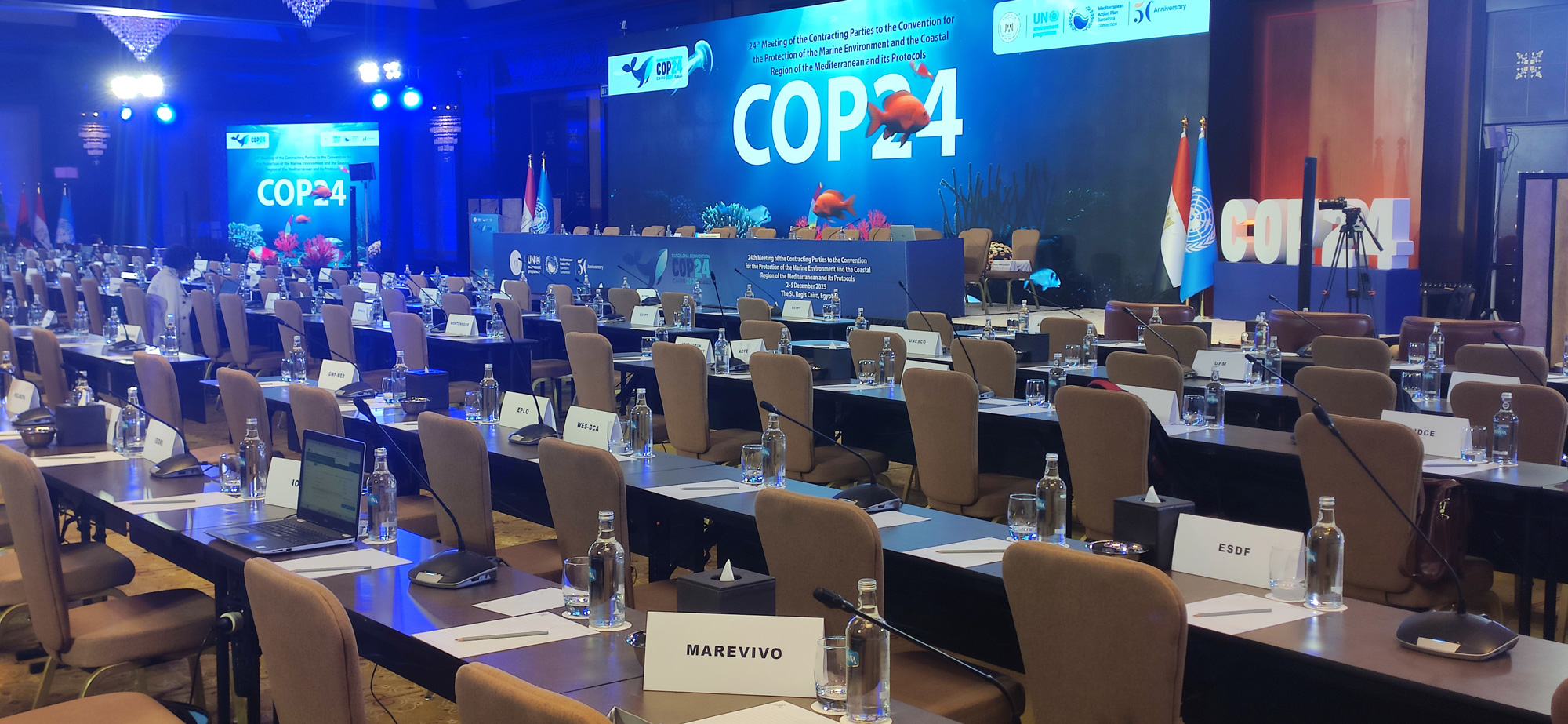
At international conferences, the language is always polished, cautious, carefully crafted so as not to offend anyone. And yet, even in the new Ministerial Declaration adopted at COP24 of the Barcelona Convention in Cairo, marking the fiftieth anniversary of the UNEP/MAP Programme, a familiar phrase appears once again: “our determination to act”. An impeccable formula, certainly. But the Mediterranean is a sea that does not live on formulas: it lives or dies according to actions. And too often, those actions fail to materialise.
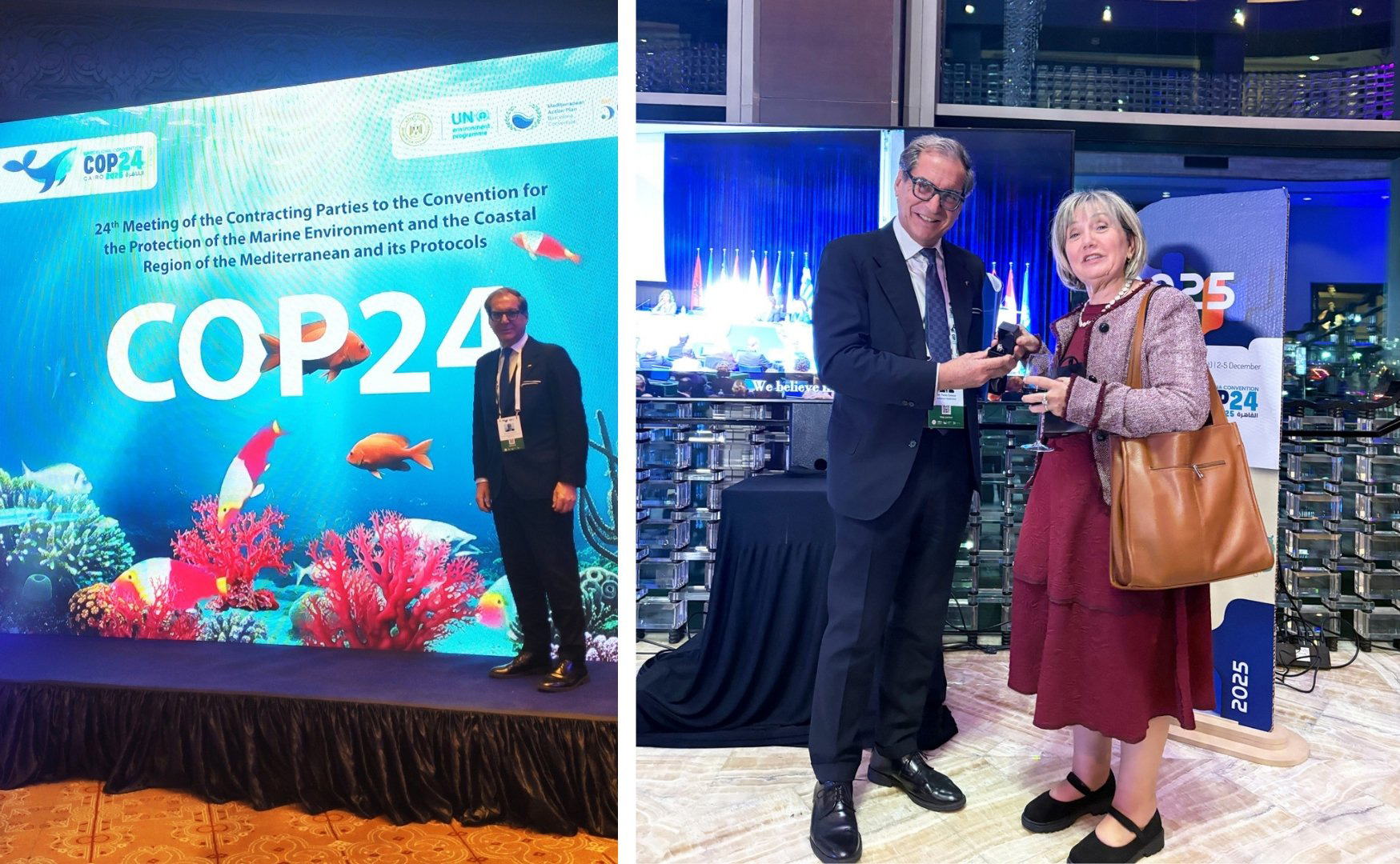
Marevivo arrived in Cairo with something different: a concrete, structural and immediately actionable proposal, capable of transforming the Mediterranean from a fragmented mosaic into a truly interconnected ecosystem. The international campaign “United States for the Mediterranean Marine Environment” calls for the creation of a Mediterranean network of Marine Areas of Common Environmental Interest and cross-border ecological corridors, based on a simple yet revolutionary principle: protecting together what is, by its very nature, indivisible.
At the heart of the proposal lies one of the Mediterranean’s greatest and most overlooked problems: we do not truly know its biodiversity. Even within Marine Protected Areas, there is still no comprehensive inventory of species. And yet Marevivo has insisted for years on the centrality of knowledge: from COP21 Med in Naples in 2019, to the international campaign “Only One – One Planet One Ocean One Health” aboard the training ship Amerigo Vespucci, and on to the UN Ocean Conference in Nice in 2025. You cannot protect what you do not know. You cannot manage what you do not measure.
The new Exclusive Economic Zones, which are reshaping the Mediterranean map, are reducing areas of high seas but also offer a rare and valuable opportunity: to cooperate in earnest, and to build transboundary Marine Protected Areas linked by ecological corridors. A network capable of reconnecting what is now broken, restoring the ecological continuity essential for species migration, ecosystem resilience and long-term survival.
Marevivo’s campaign does not seek to create new layers of bureaucracy. Instead, it connects and strengthens existing frameworks, building a cooperative network that brings together law, science and technology. A comprehensive, modern and shared vision for one of the most heavily pressured seas on the planet.
In the months ahead, Marevivo intends to take a series of concrete next steps: establishing legal-scientific working groups, launching national and international partnerships, and planning research and biodiversity cataloguing activities. Not an abstract vision, but a tangible project, presented in the very year in which the Barcelona Convention celebrates its fiftieth anniversary.
This is the difference: while international politics risks repeating yet another list of good intentions, Marevivo is putting forward a proposal that could become a genuine legacy for Mediterranean environmental governance. A Mediterranean that is interconnected, studied, monitored and protected: not a collection of isolated safeguards, but a single, coherent ecological architecture built on knowledge of biodiversity and ecosystems.
Because when the Mediterranean falls ill, we all lose. And when we finally choose to care for it and protect it properly, it is the future of everyone that stands to gain.